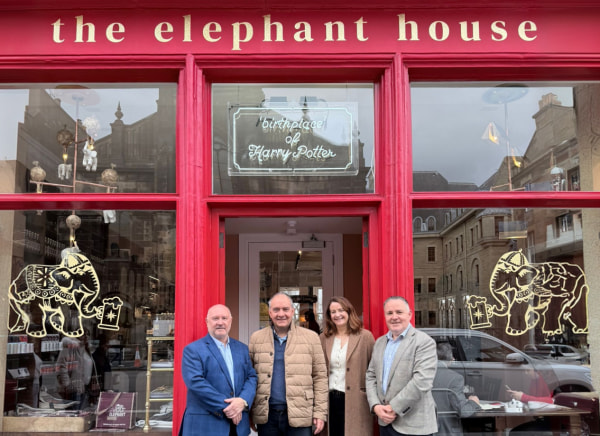
Derek Nash, Partner and Head of Commercial Property at Lindsays, believes property developers - as well as book fans - can take inspiration from the transformation of the ‘birthplace of Harry Potter’.
The rebirth of The Elephant House in Edinburgh has been a tale of tenacity and ingenuity. The efforts behind its opening were nothing short of heroic, and could even inspire another story from the very place J.K. Rowling wrote much of the original Harry Potter series.
It’s a hugely impressive place and, six months on from its return and with its official reopening this week, it has been heartening to see the café once again attracting visitors from across the world to the Old Town, continuing to go from strength to strength.
But this is a destination - an attraction which has an important catalytic effect on the local economy - which could so easily have been lost.
From devastation to delay
In August 2021, The Elephant House was badly damaged by fire.
A blaze, which started in a neighbouring property at George IV Bridge, spread to the cafe, one of two regularly frequented by Rowling when writing the stories of the wizard in the mid-1990s.
Its front room was gutted. A back room, which included a wooden table which was used by the author and later reclaimed from the rubble left by the fire, was damaged by smoke and water.
It was initially thought that The Elephant House would be closed for a year while repairs took place.
That turned into more than four years after the company which owned the property went into liquidation shortly after the fire, delaying essential works to make the structure safe.
Determination and collaboration
But, throughout it all, The Elephant House’s proprietor, David Taylor remained resolute that it should reopen. Despite setback upon setback, he refused to stand still. Together with business partner Andrew McRae, he instead focused on growing and evolving the Elephant House brand.
The team here at Lindsays was pleased to work with David and Andrew as they worked to overcome the challenges they faced, at a time when book fans worldwide asked about - and eagerly anticipated - news of the cafés return.
We saw first-hand their laser-sharp focus on bringing The Elephant House ‘back from the ashes’, as Andrew described it.
David admitted that doing so was “an emotional rollercoaster”. It required a complicated construction process, as well as a genuine collaboration between the operator and their new landlord.
By working together, they were not only able to address the physical challenges of an historic site – one that had become iconic thanks to its most famous customer - but also agree on a tenancy that benefits all parties.
Lessons for property development
This combination of resilience and collaboration proved critical. It’s an example that other landlords, tenants and developers could draw inspiration from when facing challenges - even if they are not of the same scale as those encountered by David and Andrew.
The story of The Elephant house is a heartwarming one in so many ways. It’s a place that could quite easily have been erased were it not for the vision, determination and a collective will to succeed.
Its revival not only preserves a globally recognised cultural landmark but also demonstrates what can be achieved when stakeholders work together to overcome significant challenges.
For developers and property professionals alike, it stands as a powerful reminder of the value of perseverance, partnership, and long-term thinking in bringing even the most complex projects back to life.