The momentum behind employee ownership in Scotland remains strong, despite recent UK Government tax changes — and the level of interest from business owners shows no sign of slowing.
Tax changes should not overshadow the upward trajectory of Scottish companies becoming employee-owned.
Corporate lawyer Nicholas Howie, a Glasgow-based Partner at Lindsays, says enquiries about moves to employee ownership have remained healthy despite a surprise Budget announcement by Chancellor Rachel Reeves in November.
The UK Government has reduced the Capital Gains Tax (CGT) relief for business owners transitioning control to Employee Ownership Trusts (EOTs) from 100% to 50%.
But Mr Howie, who has advised a string of Scottish companies as they have become employee-owned, does not believe the tax shift should overshadow the wider benefits of staff taking the controlling stake in the places they work.
He said: "While the relief has been reduced, 50% is still sizeable. It’s significantly less tax for the sellers when compared to a conventional trade sale.
“The tax benefits should never be the sole reason for considering a transition to employee ownership. The tax relief, albeit now reduced, should not overshadow the considerable other benefits which we know that employee ownership can deliver for people and businesses. For the businesses we work with, these often far outweigh the tax benefit.
“That’s been reflected in the conversations we have had in the past few weeks with business founders and owners who are considering the change. Solid interest remains.
“Whilst the Office for Budget Responsibility anticipates a reduction in transactions motivated solely by the tax benefits, based on our experience to date, I remain positive about EOTs and expect continued growth in the number of employee-owned businesses in Scotland throughout 2026 and beyond.”
Lindsays lawyers say they have seen the transition improve productivity, staff retention and profitability because the whole workforce has a stake in its success. EOTs can also award tax free annual bonuses of up to £3,600 per year per employee.
Thousands of people across Scotland now work for employee-owned firms, with the numbers growing year-on-year.
Mr Howie added: “My experience is that one of the biggest motivators for transitioning to an EOT is cultural - preserving values and keeping an established identity.
“Founders want to ensure there’s a legacy to their success, while also securing succession, which is one of the biggest issues facing SMEs in Scotland.
“They often choose to remain with the business as part of the change, but in the knowledge that a longer-term path has been laid to ensure its continuation beyond their involvement.”
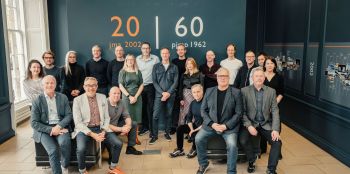
Among the employee ownership deals that Lindsays advised on during 2025 was the transition of jmarchitects - one of Scotland’s leading architecture practices - to an EOT, as well as that of Rutherglen-headquartered bathroom supplies business Wetrooms International Group.
Published 6 February 2026